A split air conditioner is one of the most reliable cooling and heating investments you can make for a home or office, but like any mechanical system, it has a working lifespan. If you are wondering how long your unit will keep performing before it needs serious repairs or replacement, the short answer is this: a well-made split air conditioner lasts 10 to 15 years on average, and a premium unit that is properly installed and regularly maintained can comfortably reach 15 to 20 years.
That range is wide for a reason. The real lifespan of a split air conditioner depends far less on the calendar and far more on build quality, installation standards, climate, and how well the unit is looked after. Below, we break down exactly what determines those years, the warning signs of an aging system, and how to get the longest possible service life out of your equipment.
The Average Lifespan of a Split Air Conditioner
Most residential split systems are engineered for roughly 10 to 15 years of dependable operation. In practice:
- Entry-level units often start showing reduced efficiency and recurring faults at around 8 to 10 years.
- Mid-range units typically deliver 12 to 15 years of solid performance.
- Premium, inverter-driven units from established manufacturers frequently exceed 15 years, and many remain in service for close to two decades when maintained correctly.
The single most important component is the compressor the heart of the system. When the compressor is built to commercial-grade standards and protected from overload, the entire unit lasts significantly longer. This is one of the main reasons our customers gravitate toward dependable, long-life brands such as Mitsubishi Heavy split air conditioners and Euroform split systems, which are designed for durability rather than just a low purchase price.
What Determines How Long Your Split AC Lasts
1. Build Quality and Brand
The quality of the compressor, heat exchanger, fan motor, and electronic board sets the ceiling for how long a unit can survive. Cheaper systems cut costs on these core parts, which is why they age faster. Choosing a unit from a respected manufacturer is the most decisive factor in long-term reliability, and it is where the difference between 8 years and 18 years is usually decided.
2. Installation Quality
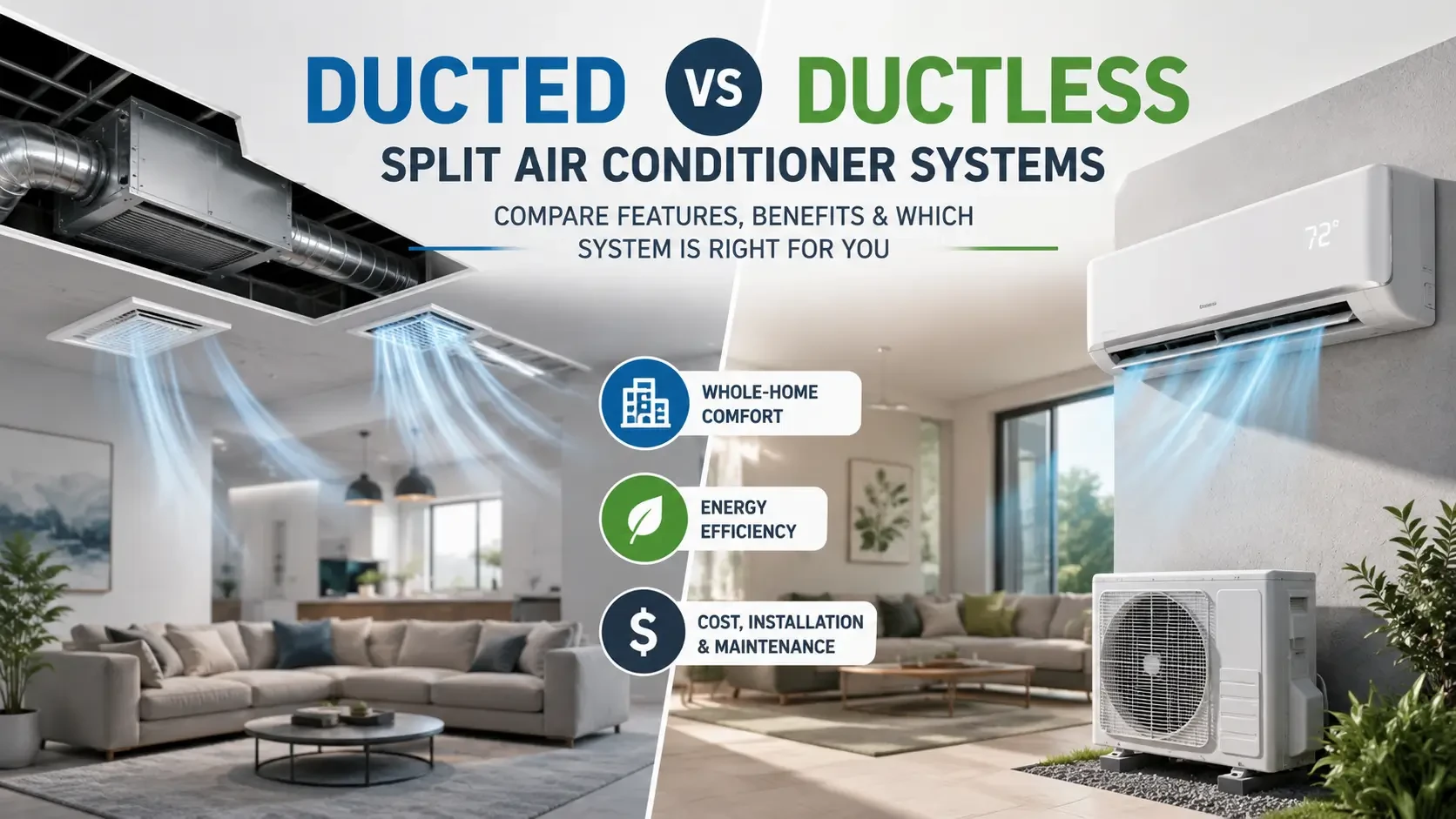
Even the best air conditioner will fail early if it is installed poorly. Incorrect refrigerant charge, undersized piping, poor vacuuming of the lines, or a badly positioned outdoor unit all place constant strain on the system. Professional installation is not an optional extra it is the foundation of a long lifespan. If you are considering a larger or multi-room setup, the same principle applies to a multi split air conditioner, where correct line sizing across several indoor units is critical.
3. Regular Maintenance
Maintenance is the factor most directly under your control. Dirty filters, clogged coils, and low refrigerant force the compressor to work harder and shorten its life. A clean, well-serviced unit runs cooler, draws less power, and lasts years longer than a neglected one. Simple seasonal servicing filter cleaning, coil inspection, and a refrigerant check can add several years to the system. The right air conditioning accessories, from replacement filters to monitoring controllers, make this upkeep far easier.
4. Usage Patterns and Climate
A unit running almost continuously through long, hot summers will naturally wear faster than one used a few months a year. Frequent on/off cycling is also harder on the compressor than steady operation, which is precisely why modern inverter systems which modulate output instead of switching fully on and off tend to last longer and run more efficiently.
5. Smart Control and Operation
How you operate the unit matters. Avoiding extreme temperature settings, allowing the system to run in efficient modes, and preventing constant short cycling all reduce mechanical stress. Pairing your system with quality wired controllers or wireless controllers gives you finer control over scheduling and temperature, which translates directly into less wear over the years.
Signs Your Split Air Conditioner Is Nearing the End
Watch for these common indicators that a unit is approaching the end of its service life:
- Rising energy bills despite the same usage, signaling falling efficiency.
- Weak or uneven cooling, even after the filters are cleaned.
- Frequent breakdowns that cost more to fix each season.
- Unusual noises from the compressor or fan motor.
- Refrigerant leaks that keep recurring after repairs.
- Excessive moisture, ice buildup, or strange odors during operation.
A single symptom is not necessarily cause for replacement, but several appearing together usually means the system is wearing out.
How to Extend the Lifespan of Your Split Air Conditioner
You can realistically add years to your unit by following a few habits:
- Service it at least once a year ideally before the cooling season begins.
- Clean or replace filters regularly to keep airflow strong and the compressor relaxed.
- Keep the outdoor unit clear of leaves, dust, and obstructions for proper heat exchange.
- Address small faults early instead of letting them stress the rest of the system.
- Use efficient temperature settings rather than forcing the unit to extremes.
- Have a professional check the refrigerant level periodically, since low refrigerant is a leading cause of compressor failure.
These steps cost little compared with premature replacement, and they protect the value of your original investment.
When to Repair vs When to Replace
A practical rule of thumb: if your unit is under 10 years old and the repair costs less than a third of a new system, repairing is usually the smart choice. Once a unit passes the 12 to 15 year mark and faces a major repair particularly a compressor failure replacement is generally the better long-term decision. Newer systems are also markedly more energy efficient, so an upgrade often pays for itself through lower running costs.
If your needs have grown beyond a single room, this is also a natural moment to consider stepping up to a professional air conditioning system or, for whole-building climate control, a VRF air conditioning system. For homes looking to combine efficient cooling with heating, a modern heat pump is increasingly the system of choice.
Choosing a Split AC Built to Last
The longest-lasting systems share three traits: a robust compressor, an efficient inverter design, and a manufacturer with a proven reliability record. When you shop, prioritize these qualities over the lowest sticker price the cheapest unit is rarely the most economical once you factor in years of service and energy use.
You can explore our full range of durable, energy-efficient split air conditioners, including premium Mitsubishi Heavy and Euroform models engineered for long service life. To complete the system and keep it running at its best for years to come, browse our air conditioning accessories and controllers.
Conclusion
So, how long does a split air conditioner last on average? Expect 10 to 15 years from a quality unit, and up to 20 years from a premium, well-maintained system. The exact figure is in your hands more than you might think the right brand, professional installation, and consistent maintenance are what separate a unit that quietly retires at year eight from one that performs reliably for nearly two decades.
If you are ready to invest in a system built to go the distance, explore our complete air conditioning range and choose equipment designed to deliver comfort and value for many years to come.