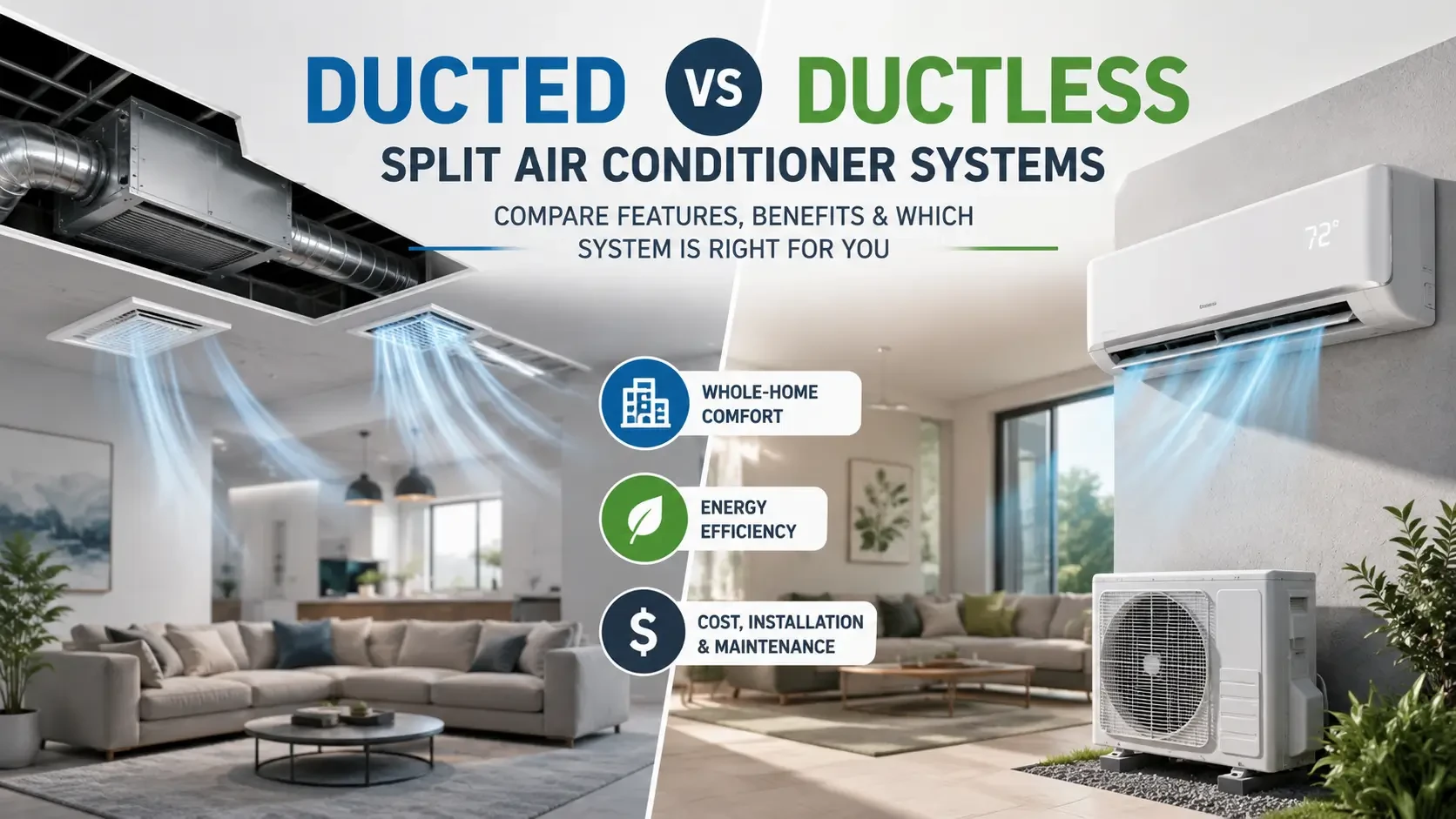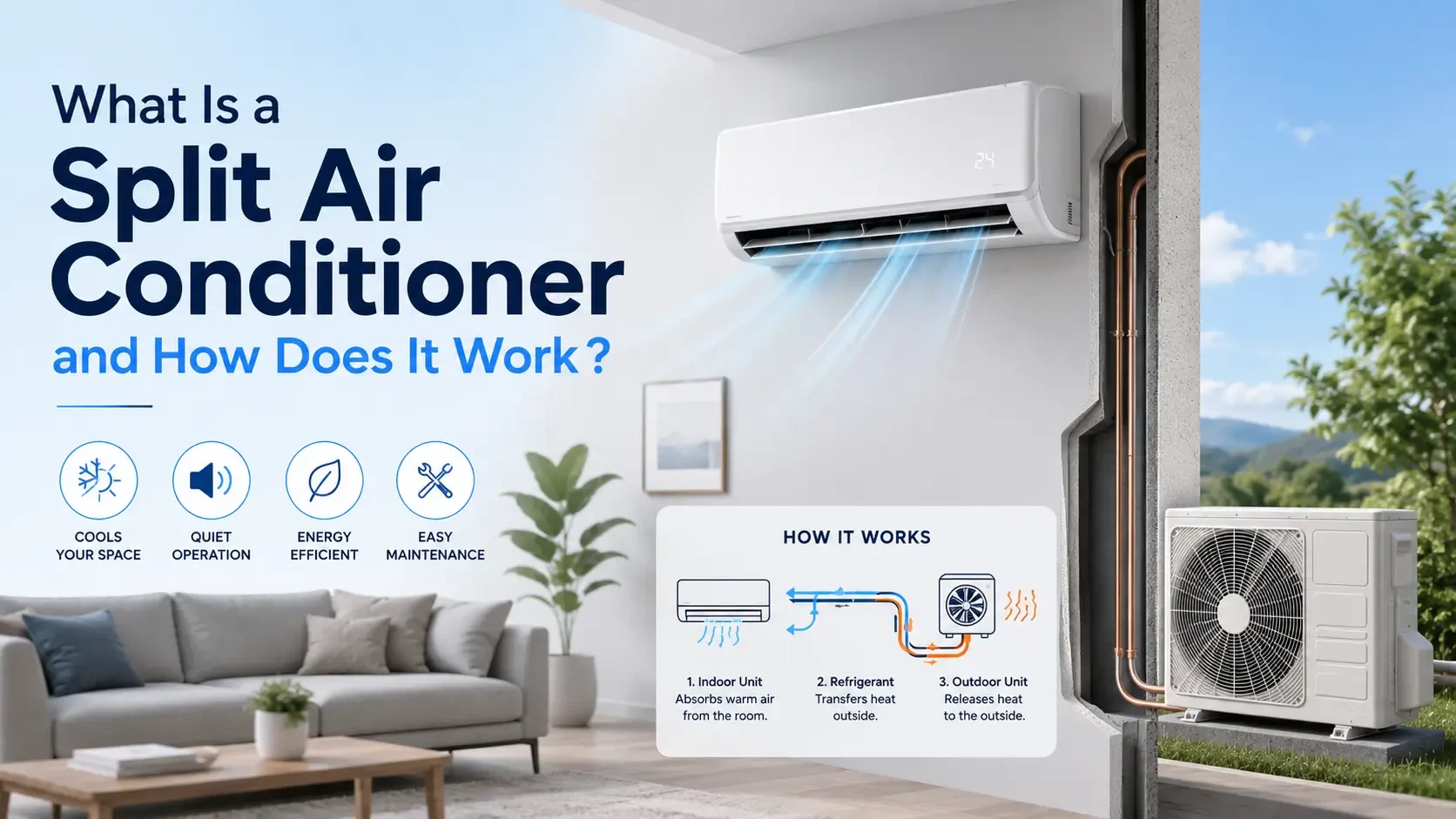
A split air conditioner is a cooling and heating system built from two connected units: one mounted inside the room and one placed outside the building. The name comes from this separation. Instead of packing every component into a single box, the system splits the noisy, heat-releasing parts from the quiet parts that sit in your living space. This design is the reason split systems became the standard choice for homes, offices, shops, and hotels across the world.
Below you will find how the system is structured, what happens inside it when you press the remote, the different types available, and how to pick the right one for your space.
What a Split Air Conditioner Actually Is
At its core, a split air conditioner moves heat from one place to another. In summer it pulls warmth out of your room and pushes it outside. In winter, if the unit is a heat pump model, it reverses the process and brings warmth indoors. Nothing is "created" in the way an electric heater creates heat. The system simply relocates energy, which is why it stays so efficient compared to older heating and cooling methods.
The indoor unit handles the part you experience directly. It blows conditioned air, filters dust, and lets you control temperature and fan speed. The outdoor unit does the heavy lifting that you never see, releasing collected heat into the open air and housing the compressor that keeps the whole cycle moving.
What sets a split system apart from a window unit is exactly this division of labor. Because the compressor and condenser sit outside, the indoor section runs quietly. You get steady cooling without the constant hum that older single-box units are known for. For most residential and light commercial needs, our range of split air conditioner systems covers single-room setups in nearly every capacity.
The Two Main Parts: Indoor and Outdoor Units
The indoor unit is usually a slim, wall-mounted panel, though floor-standing and ceiling-cassette versions exist for different room layouts. Inside it sits an evaporator coil, a fan, an air filter, and the electronics that read your settings. Cold refrigerant flows through the coil, the fan pushes warm room air across it, and the air that comes back out is noticeably cooler.
The outdoor unit carries the compressor, the condenser coil, and a larger fan. The compressor is the engine of the system. It pressurizes the refrigerant so that heat can be released efficiently outdoors. Because this unit produces the most heat and sound, placing it outside keeps your interior comfortable and calm.
Connecting the two is a set of copper pipes and electrical cables, sealed and insulated so refrigerant can travel back and forth without loss. This link is short and discreet, which gives installers flexibility in where they position each unit. A well-planned installation keeps pipe runs efficient and protects long-term performance.
How a Split Air Conditioner Works (Step by Step)
The cooling cycle sounds technical, but it follows a clear and repeatable path. Refrigerant circulates between the two units, changing between liquid and gas to absorb and release heat. Here is the sequence in plain terms:
- The indoor unit draws in warm air from the room and passes it over the cold evaporator coil.
- The refrigerant inside that coil absorbs the heat and turns from a liquid into a low-pressure gas.
- This warm gas travels through the copper line to the outdoor compressor.
- The compressor squeezes the gas, raising its pressure and temperature sharply.
- The hot, high-pressure gas moves into the outdoor condenser coil, where the outside fan blows air across it and releases the heat into the open.
- As it cools, the refrigerant returns to liquid form, passes through an expansion valve, and flows back indoors to start the cycle again.
This loop runs continuously while the unit is on, and modern inverter models adjust the compressor speed to match the exact cooling demand rather than switching fully on and off. That fine control is what makes today's systems quieter and far cheaper to run than fixed-speed designs from a decade ago.
For heat pump models, the same components run the cycle in reverse during cold months, pulling warmth from the outside air and delivering it indoors. If year-round comfort and lower heating bills matter to you, our heat pump systems are designed around exactly this principle.
Key Components Inside the System
Understanding the main parts helps when you compare models or talk to an installer. Each component has a specific job, and the quality of these parts is what separates a reliable unit from one that struggles after a few seasons:
- Compressor: The heart of the outdoor unit. It pressurizes refrigerant and drives the entire heat-transfer cycle. Inverter compressors vary their speed for steady comfort and lower energy use.
- Evaporator coil: Located in the indoor unit, it absorbs heat from the room air and cools it before the fan sends it back to you.
- Condenser coil: Found outdoors, it releases the collected heat into the open air.
- Refrigerant: The fluid that carries heat between the two units, switching between gas and liquid as it travels.
- Expansion valve: Controls how much refrigerant enters the evaporator and manages its pressure drop.
- Air filters: Trap dust, pollen, and particles, keeping both the air and the internal coil clean.
- Thermostat and control board: Read your settings and tell the system how hard to work.
Many of these parts can be monitored and managed centrally in larger installations. For buildings that need coordinated control across several rooms, our central controllers and accessories give facility managers a single point of command.
Different Types of Split Air Conditioners
Not every space has the same needs, and split technology has branched into several formats to match. The classic single-split setup pairs one indoor unit with one outdoor unit, which is ideal for a bedroom, a small office, or a shop. It is the simplest and most common arrangement.
When you want to cool several rooms but prefer not to crowd your exterior with multiple outdoor boxes, a multi-split system connects two or more indoor units to a single outdoor unit. This keeps the outside of your building tidy while letting each room set its own temperature. Our multi split air conditioner range is built for exactly these apartment and multi-room situations.
Larger buildings move into professional territory. Offices, restaurants, and retail floors often need higher capacity and more durable components than a home unit can offer. For these demands, our professional air conditioner lineup delivers the airflow and reliability that commercial spaces require.
For the biggest projects such as hotels, hospitals, and office towers, VRF technology takes the concept even further. It links many indoor units to a powerful outdoor system that distributes refrigerant intelligently across the whole building. If you are planning at this scale, explore our VRF air conditioner systems, which are engineered for precise, zone-by-zone climate control.
Why Homeowners and Businesses Choose Split Systems
Energy efficiency is usually the first reason people lean toward split air conditioners. Because the system moves heat rather than generating it, and because inverter models match output to demand, monthly running costs stay manageable even during peak summer. Over a few years, that efficiency often pays back the difference in purchase price.
Comfort is the second major draw. Split systems run quietly indoors, distribute air evenly, and let you fine-tune the temperature room by room. There is no ductwork to lose energy through, which is a common weak point in older central systems. You feel the difference within minutes of switching one on.
Flexibility rounds out the appeal. A split unit can be installed in an existing building without major construction, since only a small hole is needed for the pipes and cables. Whether you are fitting out a single room or planning climate control for an entire commercial floor, there is a configuration that fits. This adaptability is why the technology spans everything from compact apartments to large industrial sites.
Air quality also deserves a mention. The built-in filters trap dust and allergens with every cycle, and many models add antibacterial or deodorizing layers. For households with sensitivities, this steady filtration is a quiet but real benefit.
Choosing the Right Split AC for Your Space
The most important factor is capacity, measured in BTU or kilowatts. A unit that is too small will run constantly and never quite cool the room, while one that is oversized will cycle on and off too quickly, wasting energy and leaving humidity behind. Matching capacity to room size, ceiling height, sun exposure, and the number of people using the space is the foundation of a good choice.
Think next about how many rooms you want to condition. A single room points clearly toward a standard split unit. Several rooms in a home or apartment usually favor a multi-split arrangement, while whole commercial buildings call for professional or VRF solutions. Mapping your layout before you buy prevents both underspending and overspending.
Energy rating is worth real attention. Inverter models cost a little more upfront but reward you with lower bills and quieter operation for years. Look at the seasonal efficiency figures rather than just the headline number, since those reflect real-world running across changing conditions.
Climate matters too. If your winters are cold and you want one system for both seasons, a heat pump model earns its keep by handling heating as well as cooling. Pairing the right type with your local weather is often the difference between a unit you tolerate and one you forget is even there because it simply works.
Maintenance Tips to Keep It Running Efficiently
A split air conditioner rewards a little routine care with years of dependable service. The simplest task is cleaning the indoor air filters, which most owners can do themselves every few weeks during heavy use. Clogged filters force the system to work harder, raise your energy bill, and reduce airflow into the room.
The outdoor unit needs attention as well. Keep the area around it clear of leaves, dust, and obstructions so the condenser can release heat freely. A blocked outdoor coil is one of the most common reasons a system loses cooling power as the seasons pass.
Beyond what you can do yourself, a professional service check once a year keeps refrigerant levels correct, coils clean, and electrical connections sound. Catching a small refrigerant leak early, for example, prevents the kind of compressor strain that leads to expensive repairs later. For replacement filters, controllers, and other support parts, our air conditioning accessories section has what most installations need.
Kısacası, a split air conditioner is a smart, efficient way to control the climate in almost any space, built on a simple idea of moving heat where you want it. Once you understand how the indoor and outdoor units work together, choosing and caring for the right system becomes far easier. Whether you need a single quiet unit for a bedroom or a full VRF setup for a commercial building, matching the right type to your space is the step that delivers comfort for years.